


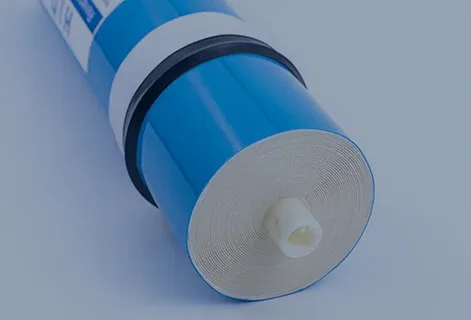
RO Membrane
An RO (Reverse Osmosis) membrane is a semipermeable barrier used in water purification systems to remove impurities from water.
How it Works:
- Semipermeable Nature: The RO membrane acts like a molecular sieve, allowing water molecules to pass through while rejecting larger molecules and ions.
- Pressure Application: Water is forced against the membrane under high pressure.
- Water Purification:
- Water molecules, being smaller, can pass through the tiny pores in the membrane.
- Larger molecules, such as salts, heavy metals, bacteria, and viruses, are too large to pass through and are rejected by the membrane.
- This process results in the production of purified water (permeate) and a concentrated stream of contaminants (concentrate or brine).
Key Features:
- High Rejection Rates: RO membranes can remove up to 99% of dissolved salts and other impurities from water.
- Versatility: Used in a wide range of applications, including residential, commercial, and industrial water purification.
- Improved Water Quality: Produces high-quality water suitable for drinking, pharmaceutical use, and various industrial processes.
Applications:
- Residential Use: In homes, RO systems are used to produce high-quality drinking water.
- Commercial Use: Used in restaurants, hotels, and other commercial establishments for drinking water and food preparation.
- Industrial Use: Employed in various industrial processes, such as pharmaceutical manufacturing, electronics manufacturing, and food processing.
- Wastewater Treatment: Used to treat wastewater and recover valuable resources.
Benefits:
- High-Quality Water: Produces water with significantly reduced levels of contaminants.
- Improved Health: Provides access to safe and clean drinking water.
- Versatility: Can be used in a wide range of applications.
RO membranes are a crucial technology in modern water treatment, providing access to clean and safe water for a variety of needs.


